A washing machine making a loud noise during spin usually means worn drum bearings, failed shock absorbers or suspension rods, or simply an unbalanced load. A deep grinding roar points to bearings, rhythmic banging points to an unbalanced load or worn dampers, and a rattle often means a coin or clip trapped in the drum.
In Dubai, hard water and dust wear these moving parts faster than usual. This guide helps you read the sound, ways to reduce washing machine loud noise spot what is safe to fix yourself, and know when to call a technician.
What the Sound Is Telling You
The spin cycle is the noisiest part of any wash because the drum turns at high speed to fling water out. Some hum and vibration is normal. Loud banging, grinding, or rattling is not. The type of noise is your best first clue to the cause.
| Noise you hear | Most likely cause |
|---|---|
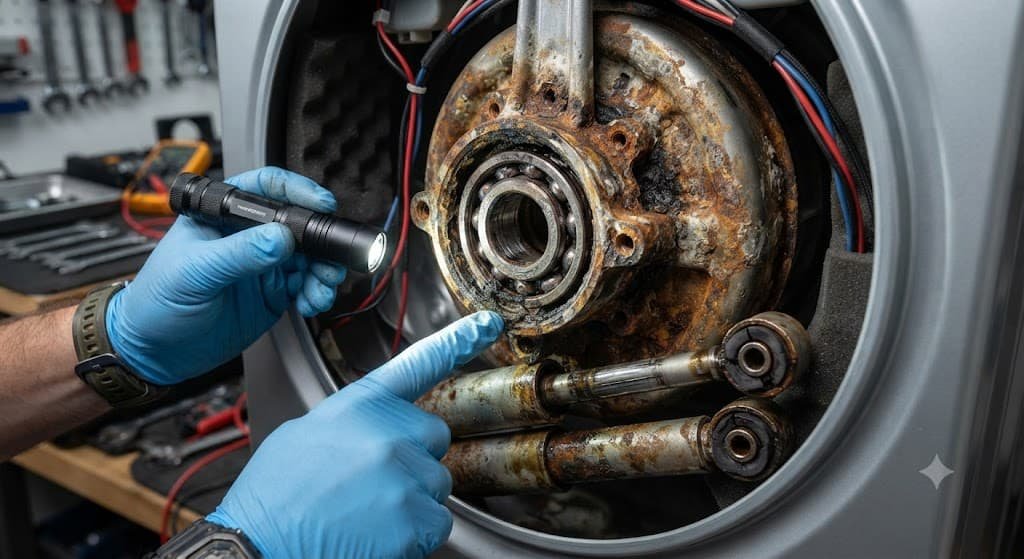
| Deep grinding or roaring | Worn drum bearings. The sound grows louder over weeks and is often paired with rusty streaks on the back wall. |
| Rhythmic banging or thumping | Unbalanced load or worn shock absorbers, so the drum swings and hits the frame. |
| Metal-on-metal scraping | A part rubbing where it should not, or bearings that have failed badly. |
| Rattling or clinking | A coin, button, or hairclip trapped in the drum or caught in the filter. |
| Loud humming without draining | A struggling or blocked drain pump straining during the water-removal phase. |
| Machine walking across the floor | Severe imbalance, uneven flooring, or missing anti-vibration feet. |
If the noise comes with water left in the drum, the pump may be involved rather than the drum itself. Our guide on a washing machine not draining covers that path.
The Common Causes, Explained Simply
Behind those sounds are a few parts that wear or slip out of place. Here is what each one does and why it fails.
Unbalanced load
The most common and least serious cause. When clothes bunch to one side, especially a single heavy item like a duvet, the drum spins off-centre and bangs against the frame. Stop the cycle, redistribute the load, and add a couple of towels for balance.
Worn drum bearings
Bearings are what the drum spins on. As they wear, usually from water and hard-water scale seeping past a tired seal, they produce a deep grinding roar that gets worse over time. This is a workshop-level repair that needs the tub opened, so it is not a DIY job.
Failed shock absorbers or suspension rods
Front-loaders use shock absorbers and top-loaders use suspension rods to steady the drum. When they weaken, the drum swings too far and thuds during spin. Pressing down on the drum and feeling it sag slowly is a sign these are worn.
Trapped foreign object
Coins, underwire, and clips slip between the drum and the outer tub and rattle at speed. Left there, a sharp object can puncture the drum, so it is worth removing early.
Key point: a rattle or an unbalanced load is often a five-minute fix. A grinding roar means bearings, which is a professional repair you should not delay.
Safe Checks Before You Call
Switch the machine off at the wall first. These checks are safe for any homeowner and rule out the simple causes.
- Redistribute the load evenly and add a towel or two if you are washing one bulky item.
- Check the machine is level; adjust the feet so it does not rock when you push a corner.
- Look and feel inside the drum and around the seal for a trapped coin or clip.
- Confirm the transit bolts were removed if the machine was recently installed; leaving them in causes violent noise.
- Run a short spin with a small balanced load and listen again.
If the noise clears, it was a balance or object issue. If a deep grinding or heavy banging remains, the internal parts need a technician.
Why Dubai Washers Wear Out Faster
Bearings and dampers fail sooner in Dubai for two local reasons. Hard water leaves scale that creeps past the drum seal and attacks the bearing, and fine dust adds grit that accelerates wear on every moving part. A machine run hard through Dubai’s heat and heavy laundry loads reaches these faults years earlier than the same model in a milder climate.
A loud spin is often the first audible warning of these wear patterns, which is why it pays to act early. Catching a worn bearing before it seizes can save the motor and drum from further damage. Our roundup of warning signs your washing machine is about to break down covers the other early signals to watch for.
Repair by Machine Type
The parts that cause spin noise differ by design, so the repair does too.
Front-load machines
Front-loaders spin faster and rely on shock absorbers and a sealed bearing pack. Grinding and heavy thudding are the usual complaints. Our front-load washing machine repair service handles bearing and damper replacement on-site where possible.
Top-load machines
Top-loaders use suspension rods and often a clutch or drive assembly that can wear noisy. If yours bangs or the drum wobbles, our top-load washing machine repair service covers the diagnosis and fix.
How Al Siraj Handles Washing Machine Loud Noise?
A certified technician diagnoses the noise on-site, opens the machine only as far as needed, and explains the fault and fixed price before starting. Bearing and shock absorber repairs are done with genuine parts and the machine is spin-tested in front of you before the technician leaves.
Al Siraj serves all of Dubai with an average response under 60 minutes and backs every repair with a 12-month written warranty. You do not move the machine; book a doorstep visit through our online booking form or WhatsApp a photo of the model label for a quick estimate.
Frequently Asked Questions
Is it safe to keep using a washing machine that is loud during spin?
A one-off unbalanced load is fine once you rebalance it. But a persistent grinding or banging means worn bearings or dampers, and running it further can damage the drum and motor. Stop using it and have it checked.
What does it mean when my washer sounds like a jet engine?
A loud jet-engine or grinding roar during spin almost always means worn drum bearings. The manufacturer Maytag notes that worn bearings are a common cause of grinding and rumbling on spin. This needs professional repair.
How much does bearing replacement cost in Dubai?
Bearing replacement is one of the more involved washer repairs, typically running AED 400 to 700 depending on the brand and model, because the tub must be opened. You receive a fixed quote before work begins.
Why is my new washing machine so loud?
A brand-new machine that bangs violently usually still has its transit bolts fitted. These steel bolts hold the drum during shipping and must be removed before first use. Check the back panel and remove them.
Can an unbalanced load really cause loud banging?
Yes, it is the single most common cause. A bunched or single heavy item spins off-centre and bangs the frame. Redistributing the load or adding towels usually solves it instantly.
Does hard water cause washing machine bearing failure?
Indirectly, yes. Dubai’s hard water leaves scale that helps water breach the drum seal, and once water reaches the bearing it corrodes and fails. Regular hot maintenance washes slow this down.
Quieting Things Down
A loud spin is your washing machine flagging a problem early, from a simple unbalanced load to worn bearings that need real repair. Read the sound, run the safe balance and object checks, and if a deep grinding or heavy banging stays, act before it spreads to the motor and drum.
A certified technician from our washing machine repair service in Dubai can pinpoint the noise and fix it the same day, with a written warranty on the work.