
A washing machine not draining is almost always caused by a blocked drain pump, a clogged pump filter, a kinked or dirt-filled drain hose, or a foreign object like a coin or sock jamming the pump. In Dubai, fine desert sand builds up in these parts faster than lint alone, which is why drainage faults are one of the most common repair calls in the city.
This guide shows you the safe checks to run at home, the signs you need a technician, and how to stop it happening again.
First, Understand How Your Washer Drains
At the end of a wash, the drain pump pulls water from the bottom of the drum and pushes it through the drain hose into your home’s waste pipe. A small pump filter sits in front of the pump to catch lint, coins, and buttons before they reach the impeller.
If any one of these parts blocks or fails, water has nowhere to go, so it stays in the drum. That is the standing water you find when you open the door. Knowing this chain helps you check each link in order.
In short: water in the drum means the drainage path is blocked somewhere between the pump filter and the waste pipe.
The Most Common Reasons a Washer Won’t Drain
Drainage faults fall into a handful of causes. In Dubai homes, sand raises the odds of the first three.
| Cause | What is happening |
|---|---|
| Clogged pump filter | Lint, coins, sand, and small items collect in the filter and choke water flow. The single most common cause. |
| Blocked drain pump | Debris or a foreign object jams the impeller so it cannot push water out. |
| Kinked or clogged drain hose | A bent, twisted, or sand-filled hose stops water leaving the machine. |
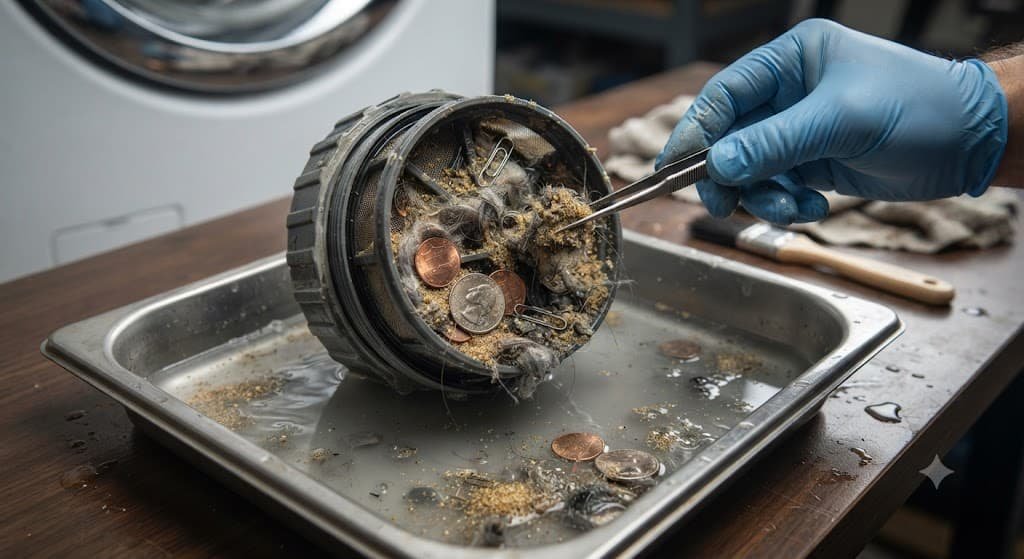
| Foreign object | A sock, coin, or hairclip slips past the filter and blocks the pump or hose. |
| Wrong cycle or unbalanced load | Delicate or no-spin settings and bulky single items leave extra water behind. |
| Faulty drain pump motor | A worn or burnt-out pump cannot drain at all; needs professional replacement. |
| Failed door lock or control board | The machine skips the drain step because it thinks the door is open or the cycle logic has failed. |
The good news is that the top three are often something you can check yourself. The last two usually need a technician.
Safe DIY Checks You Can Do at Home
Work through these in order. Stop at any point if you find the blockage. Safety first: switch the machine off at the wall before you touch anything, and have towels and a shallow tray ready because water will spill.
Step 1: Cut the power and drain the standing water
Unplug the washer or switch off its breaker. Then empty the drum. On most front-loaders, a small emergency drain hose sits behind the filter flap at the bottom front; pull it out, lower it into a tray, and let gravity empty the water.
Step 2: Check the drain hose
Look behind the machine. Straighten any kink or twist in the hose. Detach the end from the waste pipe and flush it with water to clear sand or lint. Make sure it is not pushed too far down the standpipe, which can create a siphon.
Step 3: Clean the pump filter
Open the filter flap at the bottom front. Slowly unscrew the filter with the tray in place. Remove everything inside: lint, coins, sand, hair, and small objects. Rinse it under a tap and refit it firmly.
Step 4: Run a drain or spin cycle
Power back on, select a drain-and-spin cycle, and watch whether the water clears. If it drains normally, the blockage is gone.
Quick checklist before you call anyone:
- Power off at the wall.
- Standing water drained into a tray.
- Hose straightened and flushed.
- Pump filter cleaned and refitted.
- Drain cycle tested.
When to Stop and Call a Technician
Call a professional when the drum still holds water after you have cleaned the filter and hose, or when any of these appear. Pushing further risks damaging the pump or voiding a warranty.
- Water remains after the filter and hose are clean, pointing to a failed pump or a deeper clog.
- You hear a loud humming or grinding during the drain step, a sign the pump motor is straining or seized.
- There is a burning smell, smoke, or the power keeps tripping.
- An error code appears on the display that clears then returns.
- The problem keeps coming back after every wash.
A recurring drainage fault usually means the pump itself is worn or sand has scored the impeller. Our guide on a clogged washing machine pump in Dubai explains what that repair involves.
If the noise is the main symptom rather than standing water, the cause may sit elsewhere; see what a loud noise during spin means.
Why This Happens So Often in Dubai
Fine desert sand is the difference between Dubai and cooler climates. It rides indoors on beach towels, gym kit, and children’s clothes, then settles in the pump filter and hose. Sand is abrasive, so besides blocking flow it slowly wears the pump seals and impeller.
Hard water adds to it. Limescale narrows the hose over time, so even a modest amount of sand clogs it sooner. The two together are why a Dubai washer needs its filter cleaned far more often than the manual suggests.
Practical habit: clean the pump filter once a month rather than once a season. It takes five minutes and prevents most drainage call-outs.
How Al Siraj Fixes Drainage Faults
When a technician arrives, the machine is diagnosed on-site and the fault explained before any work begins. Most drainage repairs are completed in 30 to 60 minutes: clearing the pump, replacing a worn pump or hose with genuine parts, and testing a full drain cycle in front of you.
Al Siraj covers all of Dubai with an average response time under 60 minutes, a fixed quote before work starts, and a 12-month written warranty on the repair. Service vans carry common washer pumps and filters, so most jobs are finished on the first visit. You never move the machine; book through our online booking form or send a WhatsApp photo of the model label for a quick estimate.
Frequently Asked Questions
Why is my washing machine not draining but spinning?
This usually points to a partial blockage in the pump filter or hose rather than a total failure. The drum can still spin, but the pump cannot clear all the water. Clean the filter and hose first; if water remains, the pump likely needs attention.
Can I fix a washing machine that won’t drain myself?
Often yes, if the cause is a clogged filter or kinked hose. Switch off the power, drain the standing water, clean the filter, and check the hose. The manufacturer Whirlpool notes that many drainage issues come from settings, load balance, or a blocked filter. If it persists after these checks, call a technician.
How much does it cost to fix a washing machine that won’t drain in Dubai?
Clearing a blocked pump or filter is at the lower end of repair costs, while a full drain pump replacement typically runs AED 200 to 450 depending on the brand. You will get a fixed quote before work starts.
Why does my washer keep clogging in Dubai?
Desert sand and hard water build up in the pump filter and hose faster than ordinary lint. Cleaning the filter monthly and running a hot maintenance wash reduces repeat clogs.
Is standing water in the washing machine dangerous?
It is not immediately dangerous, but leaving it breeds mould and bad smells, and a stalled cycle can stress the pump. Drain it and diagnose the cause rather than leaving water sitting in the drum.
How long does a drain pump repair take?
Most drainage repairs, including a pump replacement, are completed within 30 to 60 minutes on-site once the fault is confirmed.
Getting the Water Moving Again
A washing machine not draining is usually a blocked filter, hose, or pump, and in Dubai sand is the culprit more often than not. Run the safe checks in order, and if the drum still holds water or the pump sounds strained, stop and let a professional take over before the fault spreads.
A certified technician from our washing machine repair service in Dubai can diagnose and clear it the same day, then hand back a machine that drains cleanly with a written warranty.